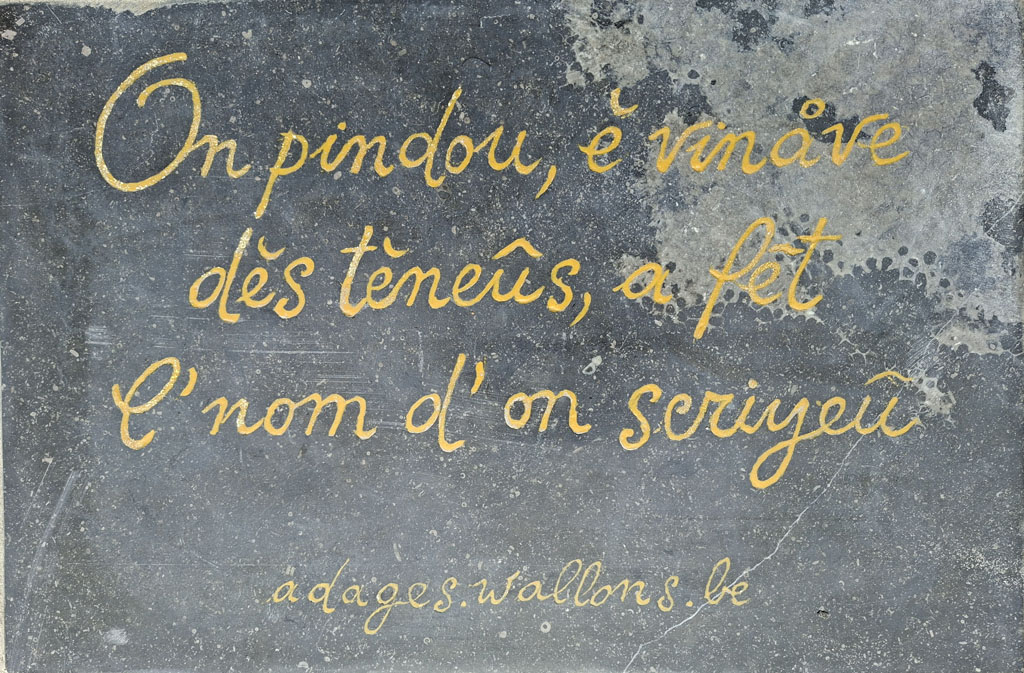
On pindou, è vinåve dè tèneûs, a fêt l’ nom d’ on scriyeû.
A hanged man in the tanners’ district made a writer famous.
Georges Simenon, the world-famous novelist, was born in Liège—more precisely in the neighbourhood of Outremeuse. He never forgot his birthplace or the neighbourhood where he grew up, and Outremeuse has never forgotten him either. Throughout its streets, countless tributes to “the man with the pipe” can be found: a bust, a tourist trail, murals, and even street names. Simenon is everywhere.
Although he wrote many other works, including Pédigrée, in which he reflects on his youth, Simenon is best known for his famous character, Commissioner Maigret—a fictional character whose adaptations and interpreters are countless!
In The Hanged Man of Saint-Pholien, one of the earliest Maigret novels, Simenon drew inspiration from a news story that had deeply affected him: the suicide of Joseph Klein, who hanged himself from the door of Saint-Pholien Church in 1922. Like Simenon, Klein had been a member of the “Caque,” a group of artists who gathered in a venue just a stone’s throw from the church. The parallels between this news story and the novel are striking.
By blurring the line between reality and fiction, Simenon reveals himself as a keen observer of human nature, while also sparking our curiosity about this formative period of his life.
